How Do I Clean a Yoga Mat: What Actually Works
How to clean a yoga mat without ruining it: follow the maker's method, measure any cleaner you use, ventilate, and dry it fully before you roll it up.
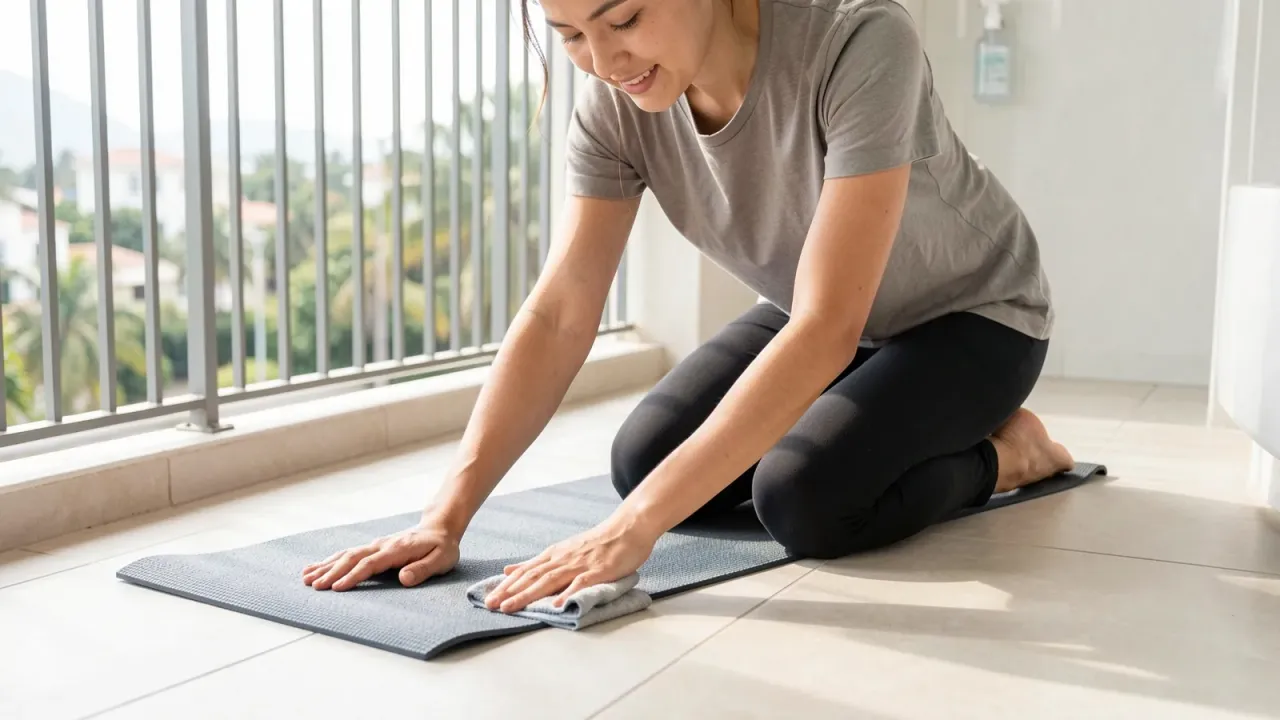
Clean a yoga mat the way the maker allows, then let it dry
"How do I clean a yoga mat" is usually two questions: how to wipe it after a class, and how to give it a more thorough wash without ruining the surface. The method that actually works is the dull one. You use a cleaner the manufacturer accepts, or a mild approach they describe, you do not soak a mat that is not sold as soakable, and you let it dry fully before you roll it. A strong, unlisted chemical can damage the surface and can fill a small room with fumes you did not need.
This is not a laboratory disinfection protocol, and it will not invent a kill-rate or a bleach recipe. Follow the label on any product, and ventilate, as general indoor-air guidance from the EPA Care for Your Air page recommends when you use products that may release pollutants. Official yoga background, without product claims, sits at NCCIH's Yoga: What You Need to Know.
A practical table of jobs, not of miracle formulas
| Job | What usually works | What to avoid |
|---|---|---|
| After class | A wipe with a slightly damp cloth, or a spray the maker allows, then air | Rolling the mat wet into a closed bag |
| A more thorough clean | The maker's wash method, measured as the label says, then a full dry | A long soak if the mat is not sold for that, or a washing-machine cycle the maker forbids |
| Smell | Thorough drying, washing as allowed, and not sealing a damp mat | Heavy perfume to cover a still-damp mat |
| Visible dirt | A soft cloth and patience, working along the surface | A scouring pad that breaks the texture you wanted for grip |
| Towel | Wash the towel as you would a sports towel, separately if it sheds | Leaving a damp towel rolled inside the mat |
"How do you clean a yoga mat" and "how to clean yoga mat" are the same job. The measurements that matter are on the cleaner label: dilution, contact time if one is stated, and rinse if a rinse is required. Do not guess a stronger mix.
A step-by-step checklist
- You have read the care line from the mat maker, if you still have it, or from the official product page
- You have chosen a cleaner that is compatible, or a mild method the maker describes
- You will follow the dilution on the label, measured, not guessed
- The room can be ventilated while you clean
- You wipe or wash the surface, including the underside if it is dirty
- You rinse if the label or the maker says to rinse
- You hang or lay the mat flat to dry fully, away from a harsh direct heat that the maker warns against
- You do not roll or bag the mat until it is dry
- You wash any towel used on the mat, and you let that dry too
If the mat has a warranty or a care card, that card beats a forum recipe. If you have already lost the card, look up the model on the maker's site before you invent a method.
What actually goes wrong, in ordinary rooms
The most common problem is not a mysterious residue. It is a mat rolled while still damp, in a gym bag, overnight. The next most common is a cleaner that is too harsh, used because it felt more serious. The economical fix is time and air, not a second product.
If you practice in a hot room, wipe the mat before you leave if the studio asks you to, and give it a proper dry at home. A yoga mat towel can reduce how much sweat sits in the mat, and it can be washed more aggressively than some mats. That is often the cheaper hygiene habit.
Keep cleaners closed and away from children and pets. Do not mix cleaning products. If a smell is of mold and does not leave after a proper dry and a permitted wash, it may be time to replace the mat. This article will not tell you to "sanitize" that away with a household chemical experiment.
Traveling with a mat, and cleaning it on the way
If you carry a mat to a studio, give it a wipe after class if you can, and unroll it at home the same day. A sealed damp tube in a car is a poor storage plan, especially in heat. If you are traveling, pack a small cloth and use the sink only as the maker's method allows; then hang the mat in a bathroom with the fan on, not over a radiator the maker warned against.
A yoga mat towel can travel in a wet bag of its own, separate from the rolled mat, and go into a regular wash at the first opportunity. Keeping sweat in the towel rather than in the mat is often the whole hygiene strategy on a short trip. It is also easier than trying to wash a mat in a hotel bathtub that the maker never approved as a method.
Label nothing with a strong scented spray "to freshen" a damp mat. Dry it. Then decide if it needs a permitted wash.
When replacement is more economical than another product
If a mat is peeling, permanently slick in a way that cleaning does not fix, or still smells of mildew after a permitted wash and a full dry, another bottle of cleaner is usually a worse spend than a new mat. Keep using a mat that is merely stained but sound, if you wish. Retire a mat that has become unsafe underfoot. Cut an old mat for kneeling in a garden only if you want to, and only after it is fully dry and finished as a yoga surface.
If you share mats in a household, agree on the after-class habit: wipe, hang, dry. A shared wet roll is how everyone loses the tool at once.
Questions about how to clean a yoga mat
How often should I clean a yoga mat?
Wipe it when it is dirty or after a sweaty practice, and do a more thorough clean when it needs one, or on the rhythm the maker suggests. There is no official universal number. A mat that is dry and not grimy can wait. A damp mat should not wait in a bag.
Can I put a yoga mat in a washing machine?
Only if the maker says that model can go in, and then only as they describe. Many mats should not. If you are unsure, do not risk the machine.
Is vinegar, soap, or a disinfectant spray a good idea?
Only if it is compatible with the mat and you follow a label. Vinegar and strong disinfectants can damage some surfaces and can be harsh in a closed room. If the maker names a method, use that. If you use a household product, ventilate, measure the dilution, and test a small corner first.
Why does my mat still smell after cleaning?
It may not have dried fully, or the towel rolled with it may still be damp. Dry both completely. If the smell remains, repeat a permitted wash, and replace the mat if it still smells of mildew after that. Perfume is not a fix.